Alabaster HVAC Duct Services: Stop Dripping & Water Damage
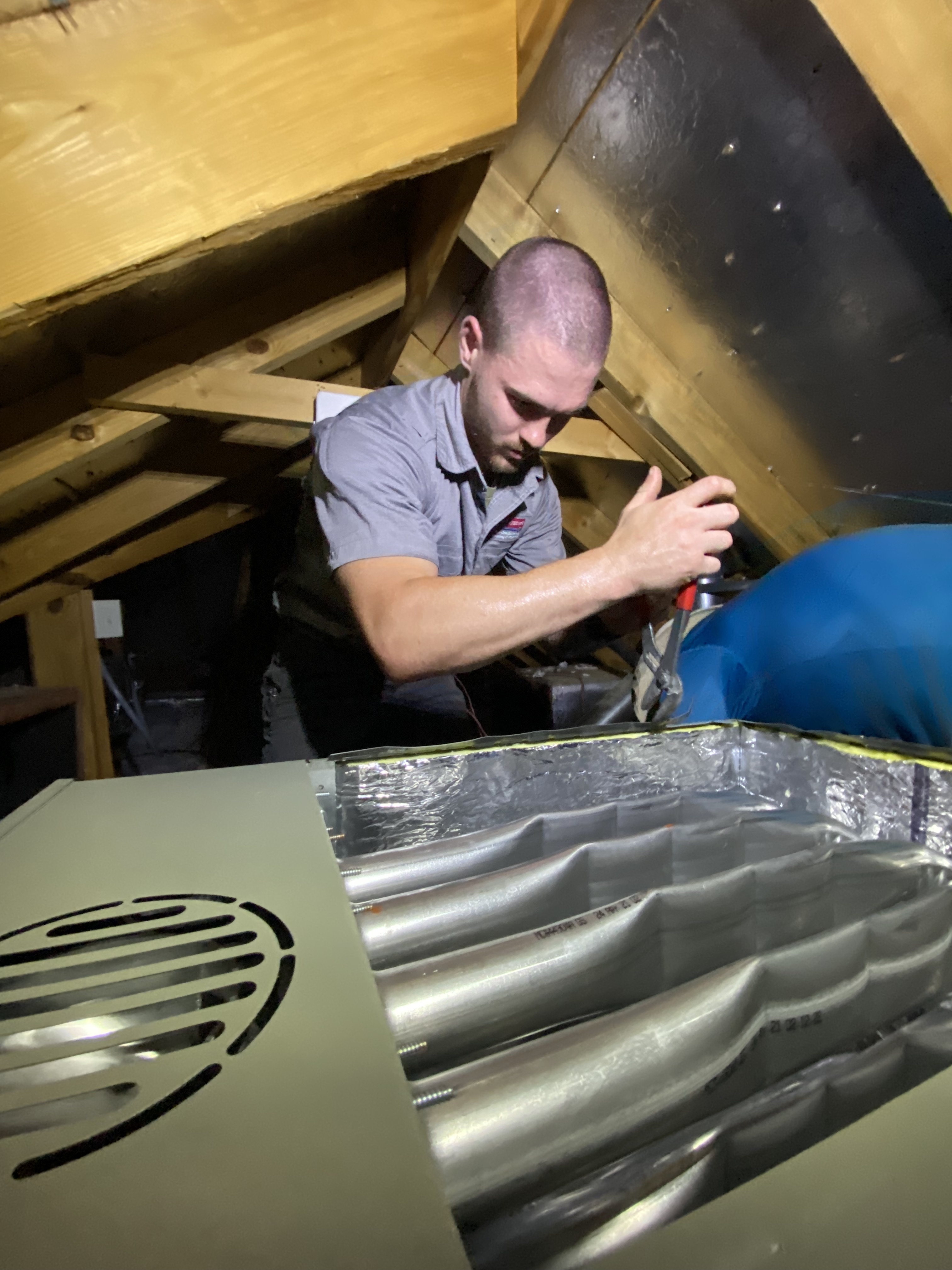
Seeing ductwork dripping on a humid Alabama afternoon is stressful. That moisture can stain ceilings, ruin insulation, and invite mold. Here is how to stop ductwork dripping fast, why it happens, and the best fixes to prevent water damage for good. If you need a hand, our NATE-certified team in Birmingham can inspect, clean, seal, and insulate to restore healthy airflow and dry ducts.
Why Ductwork Drips: The Science of Condensation
Cold supply ducts often run through warm, humid spaces like attics or crawlspaces. When warm, moist air meets cold metal, moisture condenses on the surface. If enough forms, you see beads of water and active dripping. In Central Alabama, summer humidity is high, so ducts sweat more readily when surfaces are below the dew point and the metal is exposed.
Two conditions trigger the problem:
- Cold duct surfaces. Cooling runs and nearby metal boots or registers chill during AC cycles.
- Moist ambient air. Attics, basements, and bathrooms often have higher humidity. Any air leak that lets humid air touch a cold surface accelerates condensation.
Stopping the drip means attacking both sides of the equation. Keep humid air off the metal and keep the air inside ducts moving efficiently so surfaces are not colder than necessary.
Common Causes in Birmingham Homes
Birmingham’s average relative humidity is around 70 percent, and summer dew points frequently push into the sticky range. These local conditions magnify small duct issues. The most frequent culprits we find are below.
Poor or Missing Duct Insulation
Uninsulated metal sweats. Compressed or gap-filled insulation acts like no insulation at all. Joints, elbows, and boots are common trouble spots.
Air Leaks and Negative Pressure
Loose connections, torn tape, and unsealed seams invite humid air to touch cold metal. Return leaks can also pull attic air into the system, increasing moisture load.
High Indoor Humidity
Showers, cooking, and daily living elevate indoor humidity. If ventilation or dehumidification is lacking, duct sweating rises, especially around bathroom and kitchen runs.
Short Cycling or Oversized Equipment
Short, frequent runs chill metal but do not move enough air to stabilize conditions. Oversized ACs remove less moisture per hour due to brief cycles.
Drainage and Coil Issues
A dirty evaporator coil or clogged drain pan restricts airflow and raises indoor humidity. Water can also overflow and create wet surroundings near duct chases.
Step-by-Step: How to Stop Ductwork Dripping Today
Use these homeowner-safe steps first. If dripping persists, professional service protects your ceilings, insulation, and air quality.
- Dry and Inspect
- Wipe visible moisture. Note where it returns first. Check boots, elbows, and flex-to-metal transitions.
- Improve Airflow at Vents
- Open closed or blocked supply registers. Replace dirty filters. Good airflow keeps metal closer to room temperature.
- Lower Indoor Humidity
- Run bath and kitchen exhaust fans. Set the thermostat to Auto, not On, so the coil can dehumidify. If you have a dehumidifier, set it between 45 and 50 percent.
- Add Temporary Insulation Wraps
- If safe to access, wrap sweating sections with appropriate duct insulation and vapor barrier. Do not block service panels.
- Check for Blocked Drains
- Inspect the AC drain line for clogs. If water is backing up, shut the system off and call for service to prevent overflow.
- Eliminate Heat Sources Near Ducts
- Seal attic bypasses and keep can lights or other heat sources insulated from duct runs when possible.
If these steps reduce but do not stop the drip, it likely points to air leaks, inadequate insulation, dirty coils, or system sizing concerns that need professional diagnosis.
Professional Solutions We Use
Our technicians combine inspection, diagnostics, and targeted repairs to resolve condensation at the source.
Duct Sealing and Repair
We perform rigorous inspections of supply and return registers to spot leaks or damage. We seal loose sections and repair damaged runs to restore airflow and efficiency. Eliminating leaks keeps humid air off cold metal and improves comfort.
Deep Cleaning of Coils, Pans, and Ducts
We seal off the register supply, then use high-powered equipment to extract contaminants from inside ducts. We also deep clean the evaporator coil and drain pan to improve longevity and efficiency. A clean coil lowers moisture load and stabilizes indoor humidity.
Air Balance and Damper Adjustments
Uneven airflow makes certain branches too cold while others starve. We test static pressure, balance dampers, and correct restrictions so air moves evenly. Balanced airflow reduces extreme temperature differentials that cause sweating.
Insulation Upgrades and Vapor Barriers
We replace missing or compressed insulation and address common sweat points at elbows, boots, and metal-to-flex transitions. Where needed, we add a proper vapor barrier to keep warm, humid air from contacting cold surfaces.
Dehumidification and Ventilation
If indoor humidity stays high, we recommend whole-home dehumidifiers or improved exhaust strategies. In many Alabama homes, a right-sized dehumidifier stabilizes moisture between 45 and 50 percent, which sharply cuts condensation risk.
Prevent Water Damage and Mold
Condensation can drip into drywall, insulation, and framing. Even small, frequent drips can feed mold.
Protect your home with these actions:
- Inspect Ceilings and Attic Insulation
- Look for stains or sagging near supply boots. Replace any wet insulation so hidden moisture does not remain trapped.
- Sanitize and Dry
- After leaks are fixed, use fans and a dehumidifier to dry the area fully. If growth is visible or a musty odor remains, schedule professional remediation.
- Safeguard With Drip Pans and Safety Switches
- Verify that secondary drain pans and float switches are in place and working. These devices stop overflows before they ruin ceilings.
- Schedule a Post-Fix Check
- After repairs or cleaning, a post-inspection confirms dry conditions and correct airflow.
Maintenance Timeline and Local Best Practices
Alabama humidity and pollen load make consistent maintenance non-negotiable.
- Annual duct cleaning recommended
- At a minimum, have air ducts professionally cleaned once per year. Consider more frequent service if you have pets, smoke in the home, allergy or asthma concerns, or you have completed renovations.
- Bi-annual HVAC tune-ups
- Our All-Inclusive Pink Plan includes two maintenance inspections per year and a duct inspection as part of the checkup. Pricing is simple: $14 per month for one system or $28 per month for two systems in the same home.
- Filters and Drains Every 30–90 Days
- Replace or clean filters per manufacturer guidance. Clear the condensate drain to prevent overflow and high humidity spikes.
These routines reduce dust that insulates coils, keep airflow strong, and hold humidity in the healthy zone so ductwork stays dry.
When to Repair vs. Replace Ductwork
Some ducts can be sealed and insulated. Others are past their service life.
Choose repair when:
- Leaks are localized at seams, boots, or short flex sections.
- Insulation is present but compressed or gapped and can be upgraded.
Choose replacement when:
- Ductwork is older than 15 years and repeatedly fails inspections.
- Musty odors persist after cleaning and sealing.
- Sections are crushed, broken, or contaminated beyond practical cleaning.
We provide free second opinions for replacements. Our team is licensed by the Alabama Board of Heating, Air Conditioning, and Refrigeration, and we follow manufacturer and energy-efficiency guidance to size and select the correct system.
What It Costs to Fix Duct Sweating
Budget depends on scope. Many homes only need sealing, targeted insulation, coil and drain cleaning, and airflow balancing. You save money in two ways: fewer repairs and lower utility bills from restored efficiency. Our pricing is upfront with written options, warranties on every job, and financing available for larger projects.
Service Coverage Across Greater Birmingham
We solve duct condensation issues across Birmingham, Hoover, Vestavia Hills, Homewood, Trussville, Tuscaloosa, Alabaster, Pelham, Northport, and Bessemer. Same high standards, same guarantees, and fast scheduling.
Special Offer
Special Offer: Save $199 on professional duct cleaning. Book before 12/31/2026 to lock in savings. Not valid with other offers. Present coupon at time of service.
Call (205) 675-0280 or schedule at https://www.callwilbur.com/ to redeem.
What Homeowners Are Saying
"The techs, Edgar and Andrew, were polite and professional. They did a great job with our duct cleaning and explained everything in detail. Additionally, before and after photos were provided, which was nice. I will definitely recommend Wilbur to others!"
–Connie W., Duct Cleaning
"Travis also came out to replace some rotten duct work. When he was finished the duct was as close to art work as you can imagine. Quality work all the way around. Thank you!"
–Philip N., Duct Repair
"Our dampeners on the HVAC weren't working and Connor did an excellent job getting it repaired. It was done timely and professionally."
–Tina G., HVAC Repair
Frequently Asked Questions
Why are my ducts sweating?
Condensation forms when warm, humid air touches cold duct metal. Air leaks, poor insulation, dirty coils, and high indoor humidity increase the effect. Fixing leaks, cleaning coils, and upgrading insulation usually stop it.
Is duct sweating dangerous?
Left alone, it can damage drywall, ruin insulation, and encourage mold. It also wastes energy. Quick action to seal, insulate, clean coils, and control humidity protects your home and health.
Will duct cleaning help with condensation?
Yes, when sweating is tied to restricted airflow and humidity. Professional cleaning of ducts, evaporator coil, and drain pan restores efficiency and moisture control, which reduces condensation risk.
How do I stop condensation on AC vents?
Open blocked registers, replace the filter, lower indoor humidity to 45–50 percent, and insulate metal boots. If sweating persists, schedule sealing, balance airflow, and inspect the coil and drain.
When should ductwork be replaced?
Consider replacement if ducts are 15+ years old, smell musty after cleaning and sealing, or have crushed or broken sections that cannot be repaired effectively.
Conclusion
Ductwork dripping is a moisture control problem that you can solve by sealing air leaks, cleaning coils and drains, improving insulation, and managing humidity. In Birmingham’s climate, these steps prevent stains, mold, and wasted energy.
Ready for dry, efficient ducts and cleaner air? Our credentialed team is here to help.
Call or Schedule Now
Stop ductwork dripping in Birmingham today. Call (205) 675-0280 or book at https://www.callwilbur.com/. Ask for $199 Off Duct Cleaning before 12/31/2026. Prefer ongoing protection? Join the Pink Plan for $14 per month and get two annual maintenance inspections, including a duct inspection.
Since 1979, Wilbur’s Air Conditioning, Heating & Plumbing has kept Birmingham area homes comfortable and safe. Our NATE-certified, Alabama-licensed team delivers upfront pricing, strong warranties, and a 100% Satisfaction Guarantee. We offer 24/7 emergency service, advanced diagnostics, and solutions that meet or exceed Energy Star guidance. From precise duct repairs and deep cleanings to full replacements, we bring decades of local know-how to every job. BBB A+ accredited, family owned, and focused on your comfort.
Sources12
Source links open in a new tab.
- $199 Off Duct Cleaningcallwilbur.com (opens in a new tab)
- 10% off your first service. Print offer available.wilbur1.com (opens in a new tab)
- 10% off your first service at Wilbur's Air Conditioning, Heating & Plumbing. Print offer or call to redeem.wilbur1.com (opens in a new tab)
- $199 Mainline Cleaning Special advertised on Wilbur's Air Conditioning, Heating & Plumbing website.wilbur1.com (opens in a new tab)
- Happy comment by Russellgoogle.com (opens in a new tab)
- Happy comment by Charles Pienezzagoogle.com (opens in a new tab)
- Happy comment by Rebecca Yeagergoogle.com (opens in a new tab)
- Happy comment by Connie Wallgoogle.com (opens in a new tab)
- AC Duct Repair & installation in Birmingham, AL | Home HVACwilbur1.com (opens in a new tab)
- Packaged Unit Repair & Maintenance in Birmingham, ALwilbur1.com (opens in a new tab)
- Sewer Drain Cleaning Birmingham, AL - Exceptional Drain & Sewer Serviceswilbur1.com (opens in a new tab)
- Heat Pump Services in Birmingham, ALwilbur1.com (opens in a new tab)